

If you're looking for custom vinyl stickers UK buyers can rely on, you probably already know roughly what you want: a boat name, a van door logo, opening hours for a shop window, or a short line of text for a car. The harder part is turning that idea into an order that looks right once it's on the surface. Get the size, colour or font slightly wrong and even a well-cut decal can end up hard to read.
This guide explains how ordering personalised vinyl stickers works, what to decide before you start, how single-colour vinyl-cut decals differ from printed stickers, and how to avoid the most common buying mistakes. If you already have a design in mind, you can start building it in the Stickafix online sticker designer and refine it as you read.
What Are Custom Cut Vinyl Stickers?
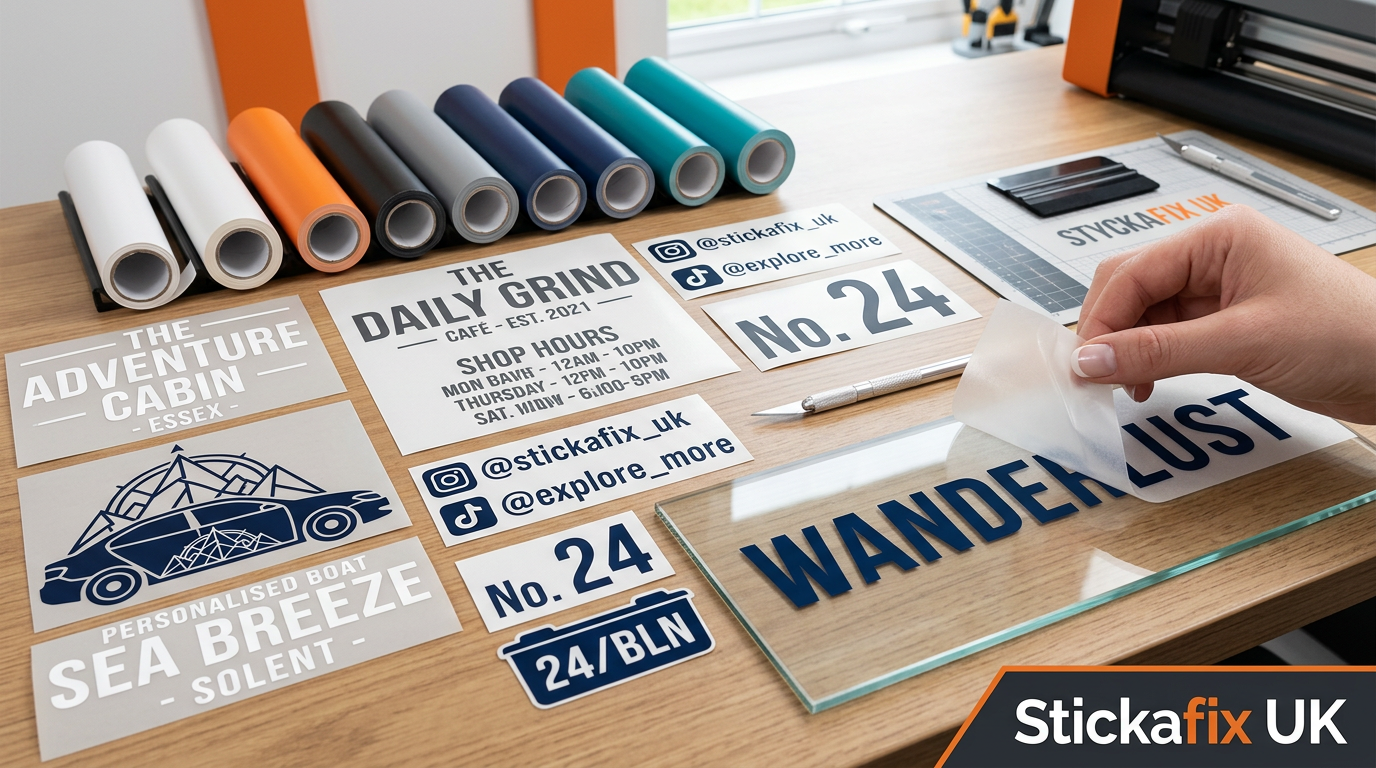
Custom cut vinyl stickers are made by cutting shapes and letters directly from a sheet of coloured adhesive vinyl. A plotter follows the outline of your text or graphic, and the waste vinyl around the design is then removed by hand. This removal process is called weeding.
What's left is only the design itself: individual letters and shapes with nothing around them. A layer of application tape (also called transfer tape) is placed over the top so every letter stays in its correct position when you lift it from the backing paper and apply it.
Because there's no background, the surface you apply the decal to becomes the background. Black lettering on a white van shows the white paintwork between the letters. White lettering on a shop window lets you see straight through the gaps. This is what gives vinyl-cut lettering its clean, painted-on look.
Single Colour Vinyl Stickers vs Printed Stickers
One of the most useful things to understand before you buy vinyl decals online is the difference between these two product types. They suit different jobs, and choosing the right one saves disappointment.
Single-colour vinyl-cut decals
Stickafix products are primarily single colour vinyl stickers cut from solid coloured vinyl. The colour runs through the material itself rather than being printed on top. They work best for:
- Names, lettering and short messages
- Logos with solid shapes and clear outlines
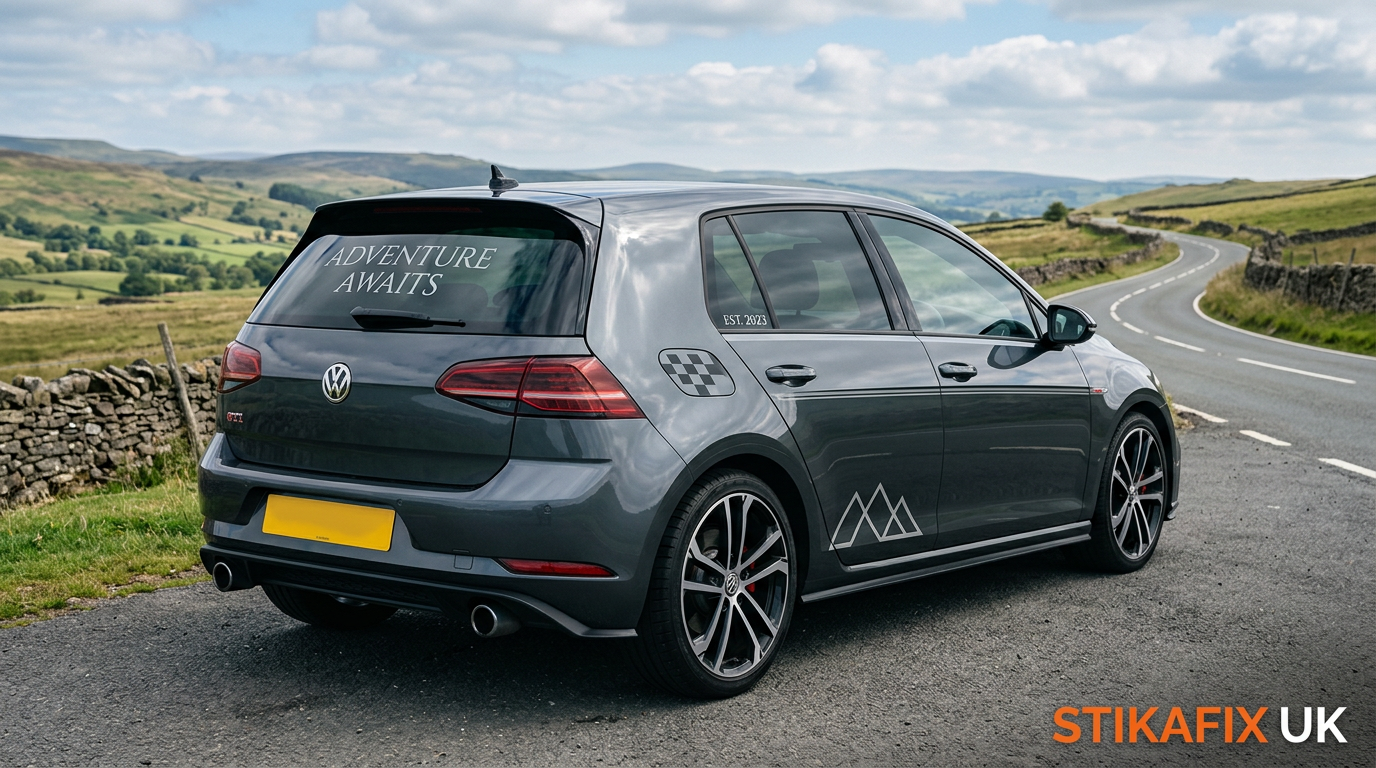
- Boat names and vehicle lettering
- Window text such as business names, phone numbers and opening hours
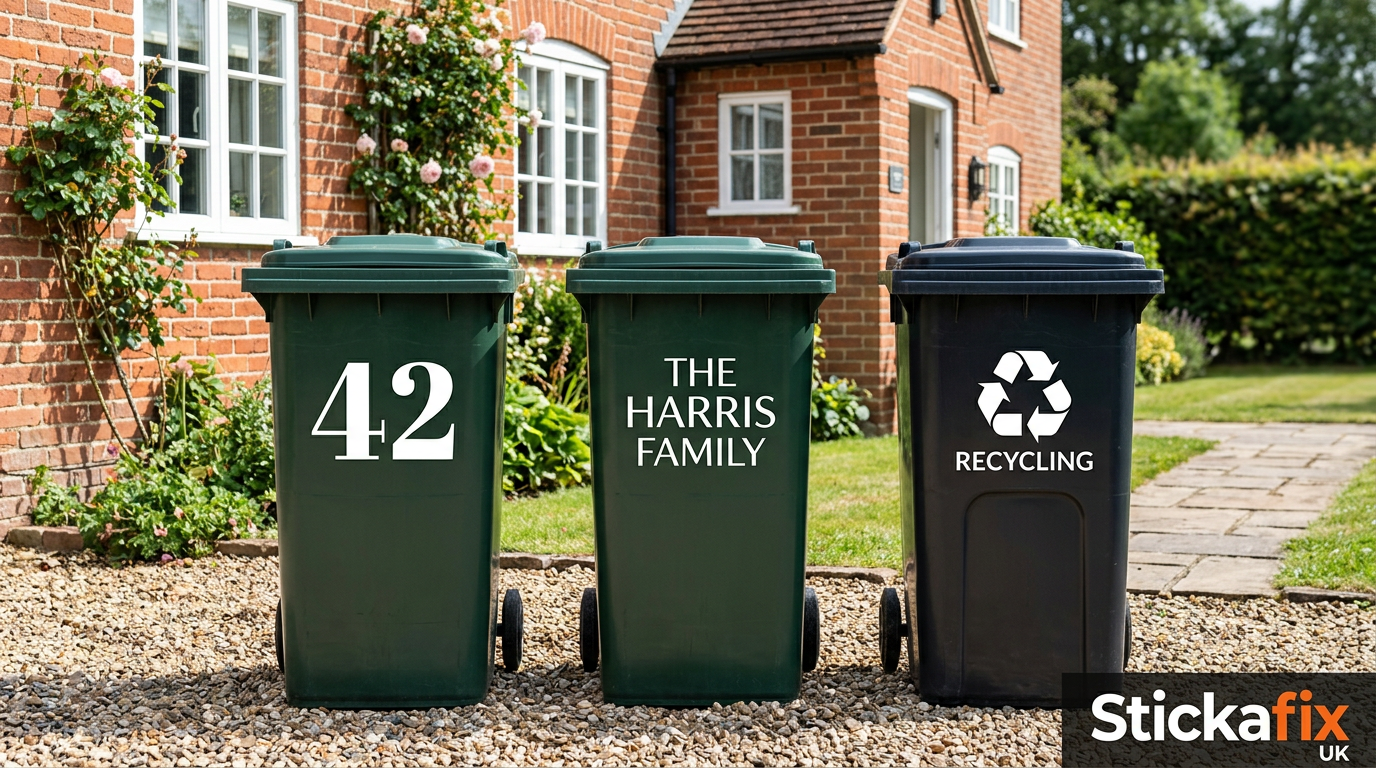
- Wheelie bin house numbers and street names
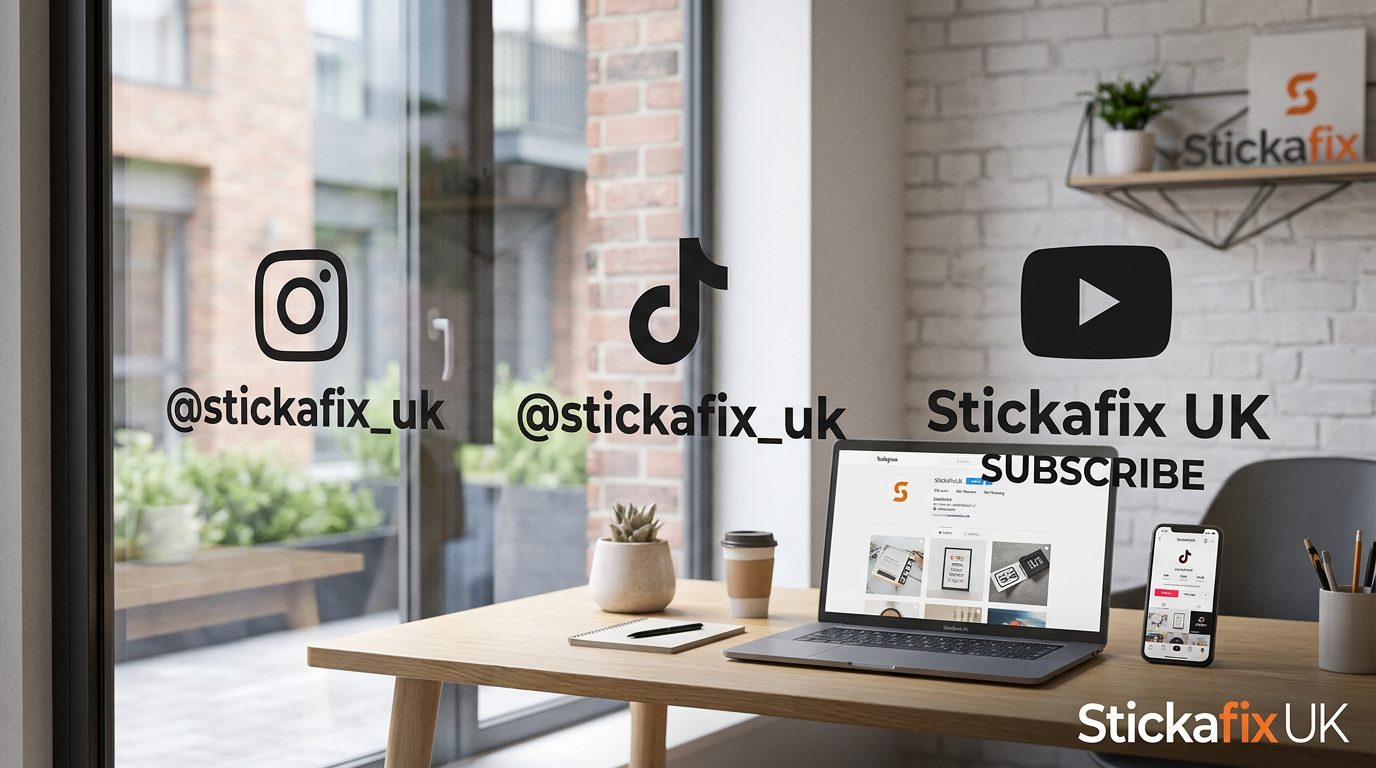
- Social media handles and icons
Printed stickers
Printed stickers are produced by printing ink onto white or clear vinyl, then cutting around the outside. They're the better choice when a design contains photographs, gradients, fine shading or many colours. The trade-off is that printed stickers usually have a visible background or border, and the look is more "sticker" than "sign-written".
Which should you choose?
If your design can be drawn in one solid colour, vinyl-cut is usually the cleaner option. If it relies on a photo or a full-colour gradient, a vinyl-cut decal won't reproduce it, and it's better to know that before ordering. Where a logo has fine detail, very thin lines or tiny text, it may need simplifying or enlarging so it can be cut and weeded cleanly.
How Ordering Made to Order Vinyl Decals Works
Every custom decal is cut to your specification, which is why a little preparation makes a real difference. The general process looks like this:
- Choose a starting point. Browse ready-made designs in the Stickafix shop, or use an online designer to create your own lettering from scratch.
- Enter your text. Type your wording exactly as it should appear, checking spelling, capitalisation and spacing.
- Pick a font. Choose a style that matches the use. Bold, simple fonts read better from a distance, while script fonts suit decorative or boat name designs.
- Select a colour. Choose a vinyl colour that contrasts strongly with the surface it's going on.
- Set the size. Enter dimensions based on measurements of the actual space available.
- Review the preview. Check the layout carefully before adding it to your basket.
- Check out. Current shipping options and pricing are shown at checkout.
Available options vary between products and designers, so always check the product page for what can be customised. Because decals are made to order, it pays to check your text and size carefully before confirming, as a typo is cut exactly as entered.
When to send a custom design enquiry
Online designers are ideal for text-based decals. If you have your own logo, artwork that needs tidying up, or a project with several pieces, it's often easier to discuss it first. You can submit a custom design enquiry with your artwork, intended surface and approximate sizes, and get guidance before ordering.
What Information You Need Before You Order
Having these details ready makes ordering quicker and reduces the chance of a decal arriving the wrong size or colour.
- Exact wording: Write it out first and read it back. Check phone numbers, web addresses and handles twice.
- Where it's going: Car body, van door, glass, boat hull, caravan panel, wheelie bin or indoor wall. The surface affects colour, size and material choices.
- Available space: Measure the flat or usable area, not just the overall panel.
- Surface colour: Note the colour behind the decal, including whether glass is tinted.
- Viewing distance: A decal read from across a car park needs to be much larger than one read up close.
- Artwork files: For logos, a clean vector file (such as SVG, AI, EPS or PDF) gives the best result. Low-resolution images may need redrawing.
Choosing the Right Size for Custom Vinyl Lettering
Size is the most common thing buyers get wrong, usually by ordering too small. A decal that looks generous on a screen can look modest once it's on the side of a van.
Start by measuring with a tape measure and marking the area with masking tape. Step back to your normal viewing distance and check whether it looks balanced. Remember that the overall width of a decal includes the whole line of text, so longer wording means smaller letters for the same width.
Watch for obstacles such as door handles, panel gaps, rivets, deep curves and window seals. Vinyl should sit on a smooth, flat area wherever possible. The guide to measuring for vinyl decals walks through this step by step, including how to account for curved surfaces.
Quick sizing tips
- Measure in millimetres or centimetres for accuracy (25.4 mm is one inch).
- Allow a margin around the decal rather than filling the space edge to edge.
- Very small text and thin strokes are harder to weed and apply, so go larger where you can.
- For multi-line designs, check both the width and height fit the space.
Choosing Colours That Actually Stand Out
Contrast matters more than personal preference. A colour you love may disappear against the wrong background. Dark vinyl on light surfaces and light vinyl on dark surfaces is the reliable starting point.
Some practical examples:
- White or yellow lettering on tinted car windows
- Black or navy lettering on a white boat hull or caravan
- White house numbers on a black or green wheelie bin
- White or gold text on a dark shopfront window
Metallic and specialist finishes can look excellent but may read differently depending on light and angle. Red on black, or grey on silver paintwork, often looks weaker than expected from a distance. For a deeper look at combinations that work, see the guide to choosing decal colours.
Choosing the Right Vinyl Material
Not all vinyl is the same, and it's worth knowing the difference between the two ORACAL materials used where applicable.
ORACAL 651 is a calendered vinyl widely used for general signage and lettering. It performs well on flat or gently curved surfaces such as windows, flat van panels, signs and bins.
ORACAL 751C is a cast vinyl. Cast films are generally thinner and more conformable, so they cope better with curves and tend to be chosen for more demanding long-term outdoor use.
How long any decal lasts depends heavily on exposure to sun, weather, washing and surface preparation, so treat lifespan as a range rather than a guarantee. Not every material suits every surface, either. Heavily textured plastics, freshly painted surfaces, rough finishes and some low-energy plastics can stop vinyl bonding properly. If you're unsure whether your surface is suitable, ask before ordering.
Applying Your Personalised Vinyl Stickers
Many buyers worry about fitting decals themselves. With the right preparation, most people get a good result on their first attempt.
- Clean thoroughly: Remove dirt, wax and grease, then wipe with isopropyl alcohol and let it dry.
- Pick suitable conditions: Apply in mild, dry weather, out of direct sun and wind. Very cold surfaces make adhesion harder.
- Use a hinge: Tape the decal in position along the top or centre so you can line it up before removing the backing.
- Squeegee firmly: Work from the centre outwards to push out air.
- Peel slowly: Remove the application tape at a low angle, pressing down any letters that try to lift.
Larger decals are often easier with a wet application method, which allows repositioning before the adhesive grips. The full guide to applying vinyl decals covers both wet and dry methods in detail.
Common Questions About Ordering Vinyl Decals in the UK
Will my decal have a white or clear background?
No. A vinyl-cut decal has no background at all. Only the letters and shapes are applied, so the surface shows through between them.
Can I order a multi-colour design?
Vinyl-cut decals are cut from a single colour of vinyl. Designs needing photos, gradients or many colours are better suited to printed stickers. If you have a two-tone idea, such as text with an outline, get in touch to discuss what's possible.
What if I'm not sure what size to order?
Measure the space, mark it with masking tape and view it from a normal distance. If in doubt, slightly larger is usually more readable than slightly smaller, provided it fits the flat area.
Can I put vinyl decals on any surface?
Vinyl works best on smooth, clean, non-porous surfaces such as glass, painted metal and gelcoat. Textured, porous or freshly painted surfaces may not bond reliably, so check before ordering.
How do I find current prices and delivery options?
Pricing depends on the product, size and options chosen, and is shown on each product page or designer. Current shipping options are displayed at checkout.
Ready to Order Your Custom Vinyl Decals?
A great decal comes down to a few clear decisions: accurate wording, a size based on real measurements, a colour with strong contrast and a material suited to the surface. Get those right and a single-colour vinyl-cut design gives a clean, professional finish that printed stickers can't quite match for lettering.
When you're ready, design your own custom vinyl lettering online and preview it before you order. If you have a logo or a more involved project, send through a custom design enquiry and we'll help you work out the best approach.