

Most cars leave the factory looking much like every other car on the road. Vinyl decals are one of the simplest ways to change that. They can add a name to the rear window, a stripe down the side or a small detail by the fuel cap. If you've been browsing car stickers UK drivers use to add personality, this guide covers ten creative ideas and the practical knowledge that helps them look right and last well.
We'll also explain how vinyl-cut decals differ from printed stickers, how to choose colours that stand out and how to get placement and sizing right before you order.
Vinyl-Cut Decals vs Printed Stickers: What's the Difference?
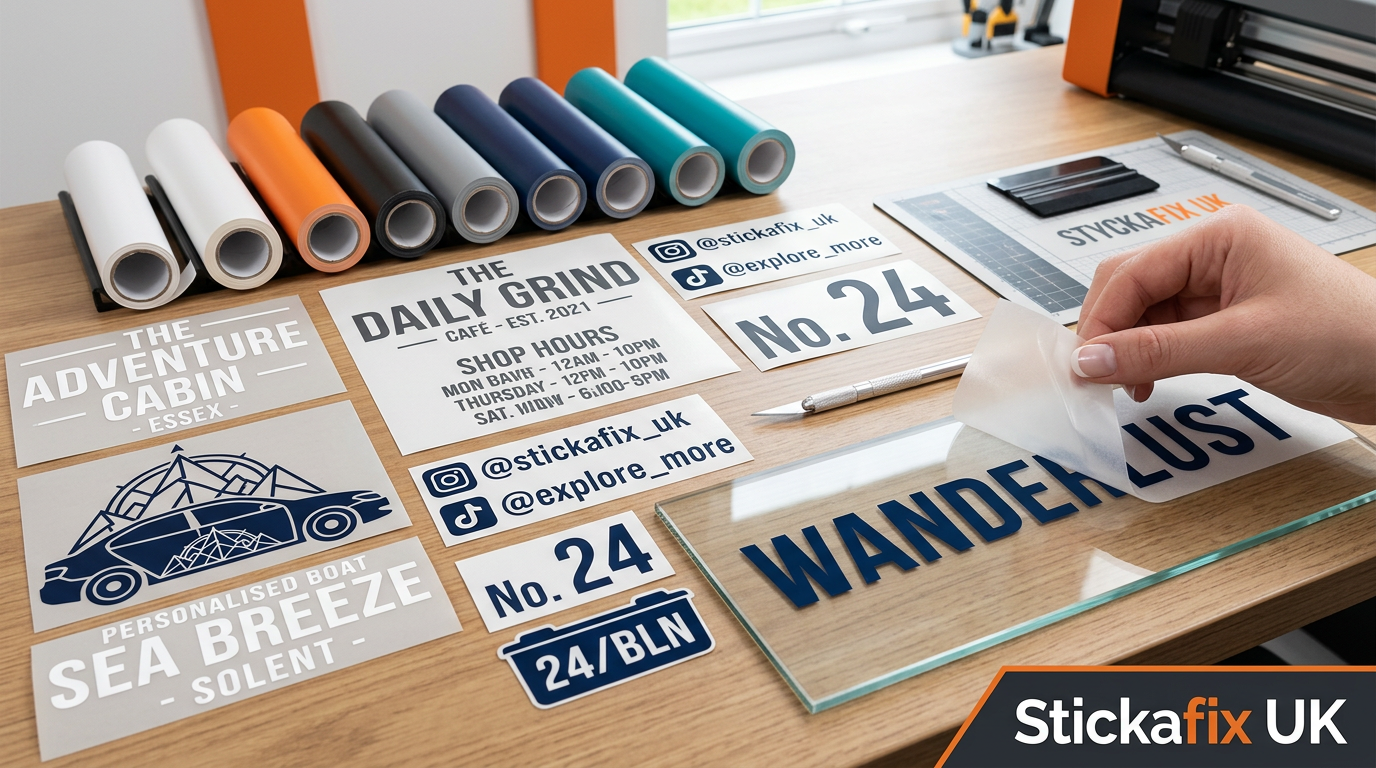
Before you pick a design, it helps to know what you're buying. A vinyl-cut decal is cut from a sheet of solid-coloured vinyl by a plotter. The excess vinyl is removed by hand (called weeding), leaving only the letters or shapes. These are then held in place by application tape so you can transfer them to your car in one piece.
Because only the design itself is left, there's no background. The paintwork or glass shows through between the letters. This gives the clean, painted-on look that suits car vinyl decals so well.
A printed sticker is ink printed onto a vinyl or paper base, usually with a visible background shape such as a rectangle or circle. Printed stickers can show full-colour images and photographs. Vinyl-cut decals are normally single colour, but they tend to look sharper and more integrated on a vehicle.
A Note on Vinyl Materials
Not all vinyl is the same. Stickafix uses ORACAL materials, including ORACAL 651 and ORACAL 751C where applicable. ORACAL 651 is a calendered vinyl that is widely used for flat or gently curved outdoor surfaces such as glass. ORACAL 751C is a cast vinyl, a more conformable material that copes better with curves and contours on body panels. Check the individual product page to see which material is used for the design you're interested in.
10 Creative Ways to Personalise Your Car
1. Rear Window Lettering
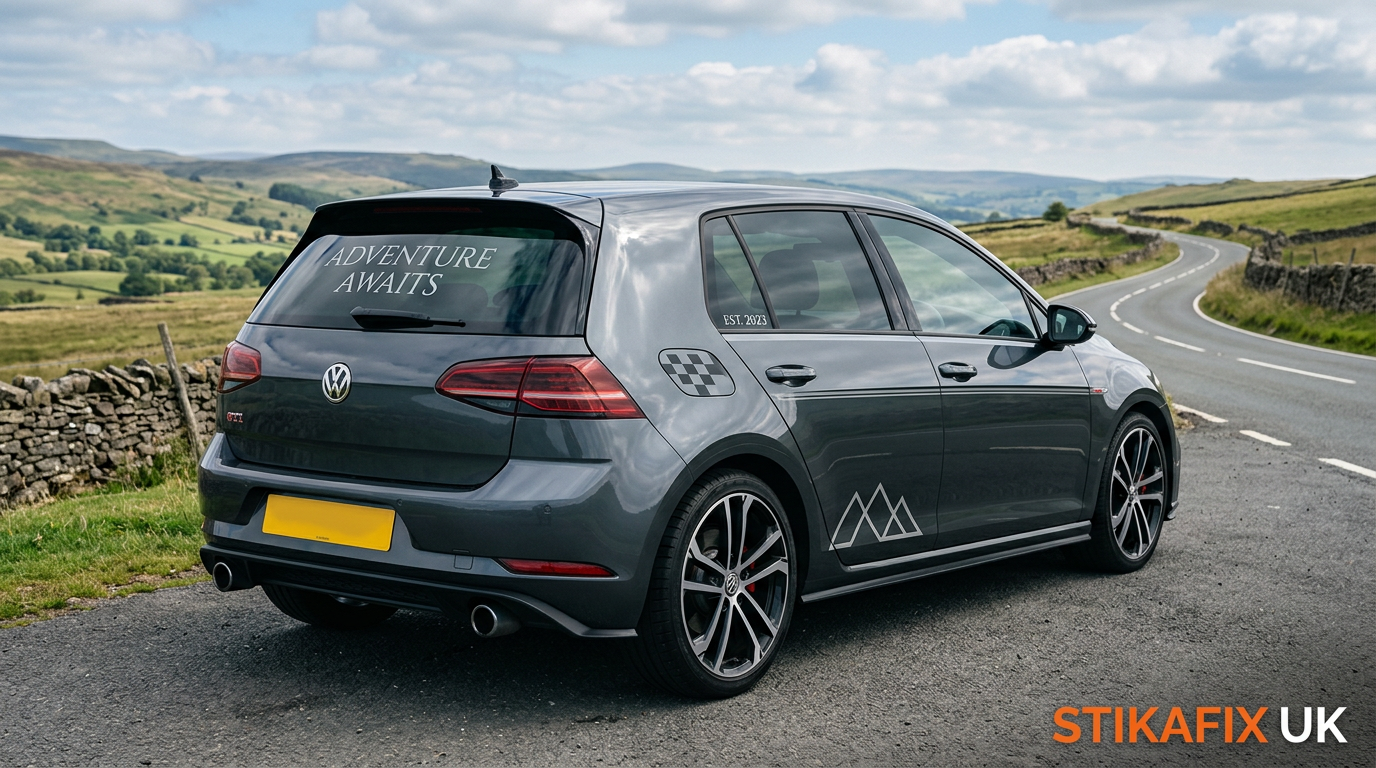
The rear window is the most popular spot for personalised car stickers, and for good reason. It's flat, easy to clean and right in the eyeline of the driver behind you. Popular ideas include a car's nickname, a favourite quote, a family surname or a nod to a hobby.
Keep the wiper sweep in mind. Lettering placed directly in the wiper path will wear faster over time, so many drivers place text along the top edge or in a lower corner instead.
2. Windscreen Banners
A banner along the top of the windscreen is a classic look in the car modifying scene. Windscreen banner stickers usually feature a single word or name in bold lettering, running across the shaded top band of the glass.
Visibility matters here. The Highway Code requires that your windows allow a clear view of the road, and rules on windscreen obstruction can affect what is acceptable. Check the current guidance on GOV.UK before fitting anything to the windscreen, and keep any banner well clear of your line of sight.
3. Side Window Car Window Stickers
Rear quarter windows and rear side windows are ideal for smaller designs. A short word, a small logo or a hobby-themed graphic works well here because it's noticed from the side without dominating the car. These smaller car window stickers are also a good way to try vinyl if you're new to it.
4. Side Graphics and Body Stripes
Running a stripe or graphic along the lower doors or sills changes the whole profile of a car. Pinstripes, sporty flashes and text along the doors are all popular car graphics UK drivers use to make a standard car look more purposeful.
Body panels have curves, swage lines and door gaps, so measure carefully and choose a design that suits the shape. Cast vinyl generally handles contours better than calendered vinyl.
5. Business Branding and Vinyl Car Lettering
If you use your car or van for work, it can double as a moving advert. Simple vinyl car lettering with your business name, phone number and website is often more effective than a busy design, because people only have a few seconds to read it as you drive past.
Keep the message short. Your business name and one contact method are usually enough. Place the most important information on the rear and sides, where other drivers and pedestrians are most likely to see it when you're parked.
6. Funny Slogans and Humorous Decals
A well-chosen joke on the back window brings a smile in traffic queues. From tongue-in-cheek warnings to light-hearted comments about your driving, funny car and 4x4 stickers are an easy way to show your sense of humour. Choose something you'll still find funny in a year's time.
7. Subtle Decorative Details
Personalisation doesn't have to be loud. Small decals near the fuel filler cap, on the B-pillar, on a wing mirror cover or in the corner of a rear window add character without changing the overall look. A small signature, a date or a tiny motif can be surprisingly effective.
These small touches work especially well when the colour is chosen to be subtle, such as a dark grey decal on a black car.
8. Hobby and Lifestyle Graphics
Your car can say something about what you love doing. Fishing, horse riding, motocross, camping and dog ownership are all popular themes. A tasteful silhouette or short phrase on a rear side window shows off your interests and can start conversations at the car park or campsite.
9. Social Media Handles
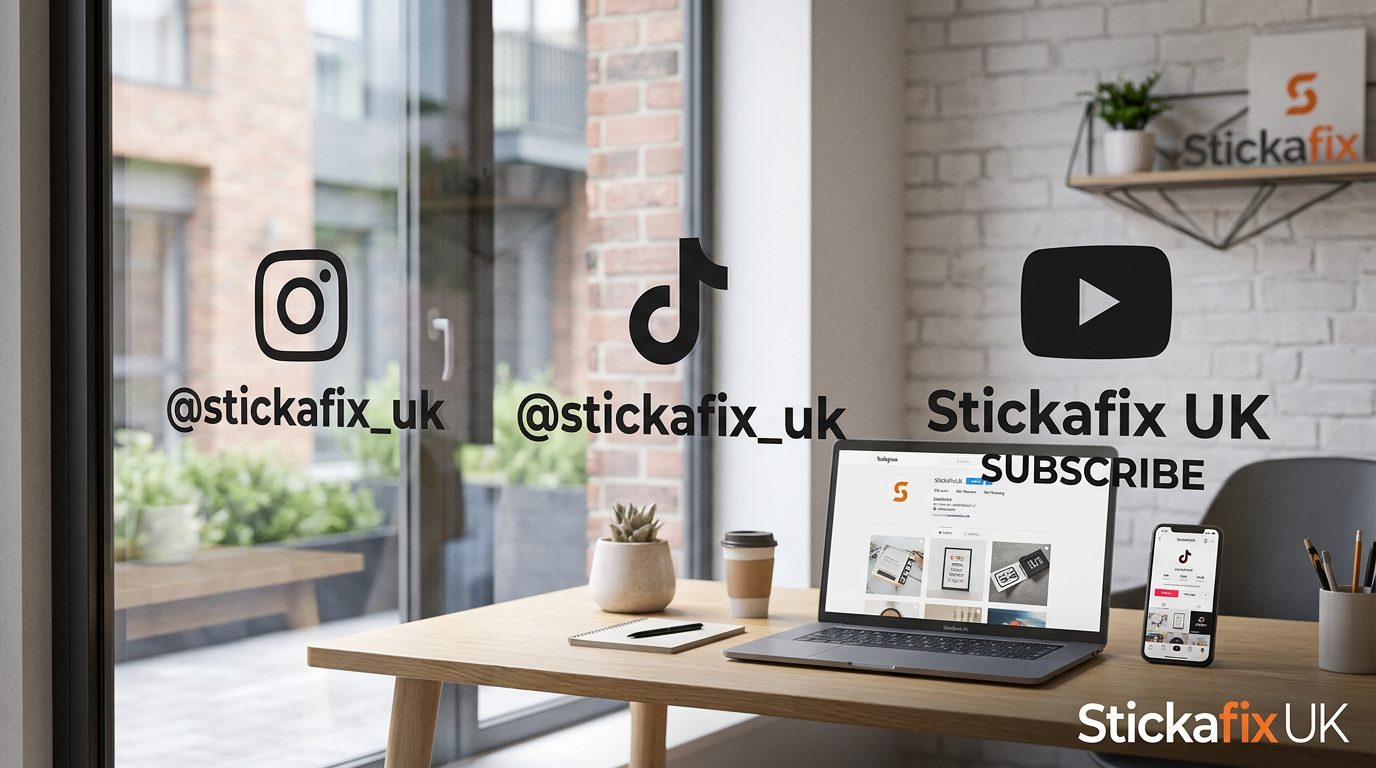
Content creators, small sellers and streamers often add their username to the rear window. A clear handle with a platform icon is a simple way to turn traffic into followers. Keep the handle large enough to read from a car length or two away, and avoid stylised fonts that make letters hard to tell apart.
10. Family and Safety Messages
Baby on board signs, "dog on board" messages and similar decals are practical as well as personal. A vinyl-cut version looks neater than a suction-cup sign and doesn't block as much of the rear view. Placing it in a lower corner of the rear window keeps it visible without obstructing your mirror view.
Choosing Colours That Work on Your Car
Colour contrast is the biggest factor in how well a decal reads. A beautiful design in the wrong colour can disappear completely. Our guide to choosing decal colours goes into more detail, but here are the basics.
- Glass: Most rear windows are tinted or appear dark from outside, so white and light colours are usually the most readable.
- Dark paintwork: White, silver, yellow and bright colours stand out on black, navy and dark grey cars.
- Light paintwork: Black, dark blue and red work well on white, silver and light grey cars.
- Subtle looks: Choose a colour close to the paint, such as grey on black, for a stealthy effect.
- Matching trim: Picking up a colour from your brake callipers, wheels or interior stitching ties the look together.
Remember that a vinyl-cut decal has no background of its own, so always picture the colour against the surface it will sit on.
Getting Placement and Sizing Right
Good placement makes custom car decals look intentional rather than stuck on. Before ordering, spend a few minutes with a tape measure and some masking tape.
- Measure the usable area. For windows, measure the clear glass, not the frame. Allow for the black dotted border (the frit) around many windows, as vinyl may not sit flat over it.
- Mark out the size. Use masking tape to outline the decal's width and height on the car. Step back several metres and look at it from the angle other drivers will see.
- Check practical obstacles. Look for wiper paths, door handles, badges, panel gaps and rear window heater lines.
- Think about readability. Thin, script-style fonts need to be larger than bold block lettering to read clearly from a distance.
- Keep it balanced. Centred text on the rear window or matching graphics on both sides usually looks better than a single off-centre design.
As a rough rule, lettering meant to be read by following traffic needs to be noticeably larger than you might expect. Small text that looks fine up close can be impossible to read from a car length away.
Applying and Caring for Car Vinyl Decals
Careful application is what makes a decal look professional. Our step-by-step guide on how to apply vinyl decals covers the full process, but these tips make the biggest difference.
- Clean the area thoroughly and remove any wax, polish or residue. Isopropyl alcohol on a lint-free cloth works well on glass and paint.
- Apply on a mild, dry day. Very cold surfaces can stop the adhesive bonding properly, and hot, sunny panels can make vinyl stretch.
- Use masking tape as a hinge to position the decal before peeling the backing paper.
- Press firmly with a squeegee from the centre outwards to remove air bubbles.
- Peel the application tape back slowly at a sharp angle, close to the surface.
- Avoid washing the car for a few days so the adhesive can settle.
Once applied, wash gently by hand where possible. If you use a pressure washer, keep the nozzle at a sensible distance and avoid blasting the edges of the decal. On rear windows with heater elements, never use a razor blade or ice scraper over the vinyl.
Frequently Asked Questions
Will vinyl decals damage my car's paint?
Quality vinyl applied to sound, factory paintwork generally removes cleanly with gentle heat. Resprayed or damaged paint can be more vulnerable, so take care when removing decals from older or repaired panels.
Can I put car stickers through an automatic car wash?
Brush car washes can be harsh on decal edges, particularly in the first few weeks. Hand washing is the gentlest option for keeping decals looking their best.
Are vinyl-cut decals or printed stickers better for cars?
It depends on the design. Vinyl-cut decals suit lettering, logos and single-colour graphics with a clean, painted-on look. Printed stickers suit full-colour images and photographs.
Can I put stickers on my number plate?
No. UK number plates must meet strict legal requirements, so avoid applying decals to them. Check GOV.UK for current number plate rules.
Start Personalising Your Car
Whether you want bold rear window lettering, a sporty side stripe or a small detail only you'll notice, vinyl decals give you plenty of creative options. Choose a colour that contrasts with the surface, measure your space carefully and take your time with application for a finish that looks like it belongs on the car.
If you have an idea in mind, you can design your own custom car decals online, choosing your text, font, colour and size, and preview it before you order.