

Your shop window is seen by everyone who walks or drives past, whether or not they step inside. Well-designed business window stickers turn that glass into a hardworking sign that tells people who you are, when you're open and how to reach you. For small businesses, cafés, salons, trade counters and offices across the UK, vinyl lettering is one of the simplest ways to make a shopfront look established and professional.
This guide explains how to use shop window lettering for opening hours, contact details, social media handles, branding and promotions. It also covers why single-colour cut vinyl works so well on glass, how to choose colours, where to place each element and how to apply it neatly. If you're starting from scratch, the business stickers range is a useful place to see what's possible.
Why Vinyl Lettering Works So Well on Shop Windows
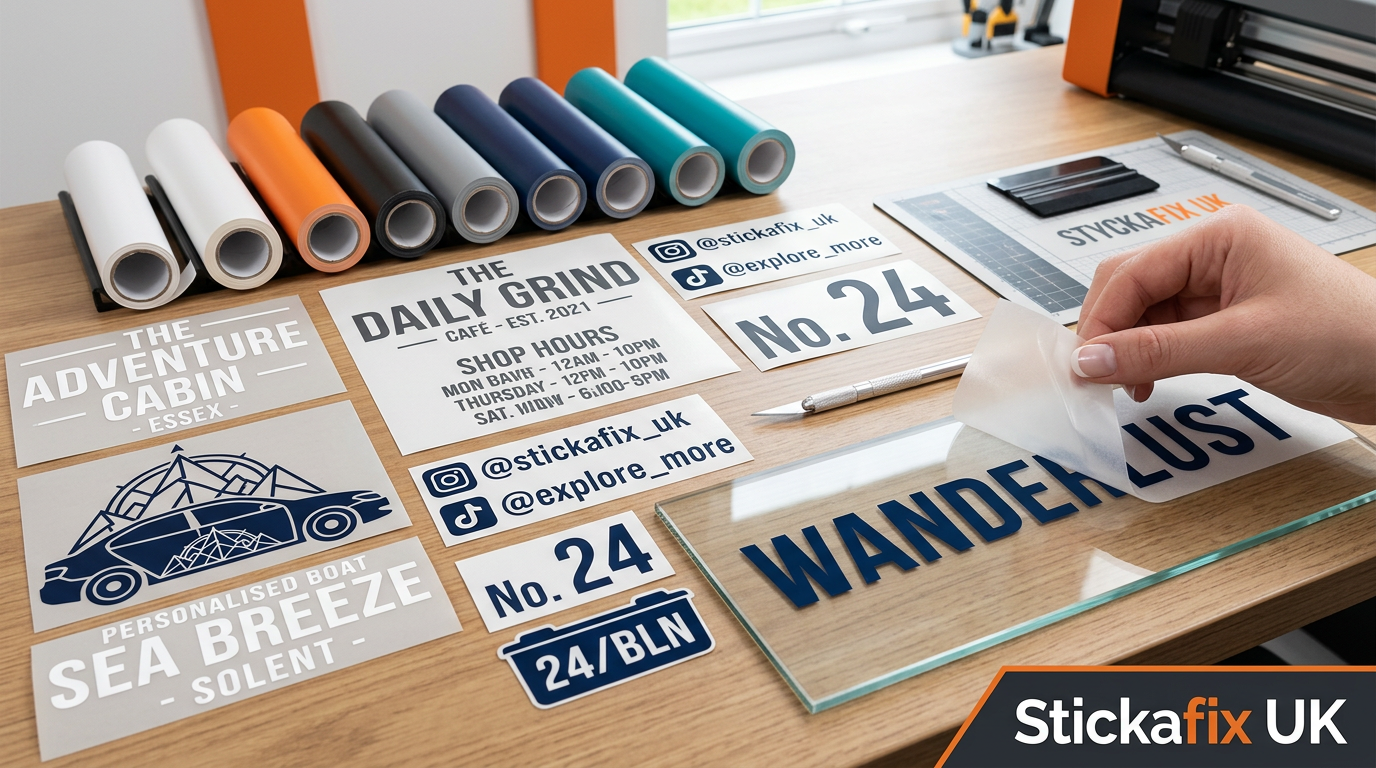
Single-colour cut vinyl is made by cutting letters and shapes from a sheet of coloured vinyl, then removing the waste material (a process called weeding). What's left is only the lettering itself. There's no clear film or background panel around the text, so the glass shows through between and around every letter.
That gives business window decals a clean, almost painted-on look. From the street, the lettering reads as part of the shopfront rather than a sticker that's been added later. It's the same reason so many independent shops and restaurants use cut vinyl instead of printed panels for their names and hours.
Practical benefits for businesses
- Crisp, sharp edges: cut vinyl lettering stays sharp at small and large sizes, which matters for readability.
- Minimal light loss: because only the letters cover the glass, your window still lets in natural light and keeps your interior visible.
- Affordable updates: if your hours, phone number or social handle changes, you can replace just that section rather than re-signing the whole frontage.
- Consistent branding: using the same font and colour across your door, windows and vehicle builds a recognisable look.
A note on vinyl materials
Not all vinyl is the same. ORACAL 651 is a calendered vinyl widely used for flat surfaces such as glass and signboards. ORACAL 751C is a cast vinyl, which is generally more conformable and designed for more demanding, longer-term use. Both are high-quality materials, but they are made differently and suit different jobs. If you're unsure which suits your application, check the product details or ask before ordering.
What to Put on Your Business Window
The best shop front stickers answer the questions customers are already asking as they walk past. Keep the information focused so the window doesn't become cluttered.
Your business name and branding
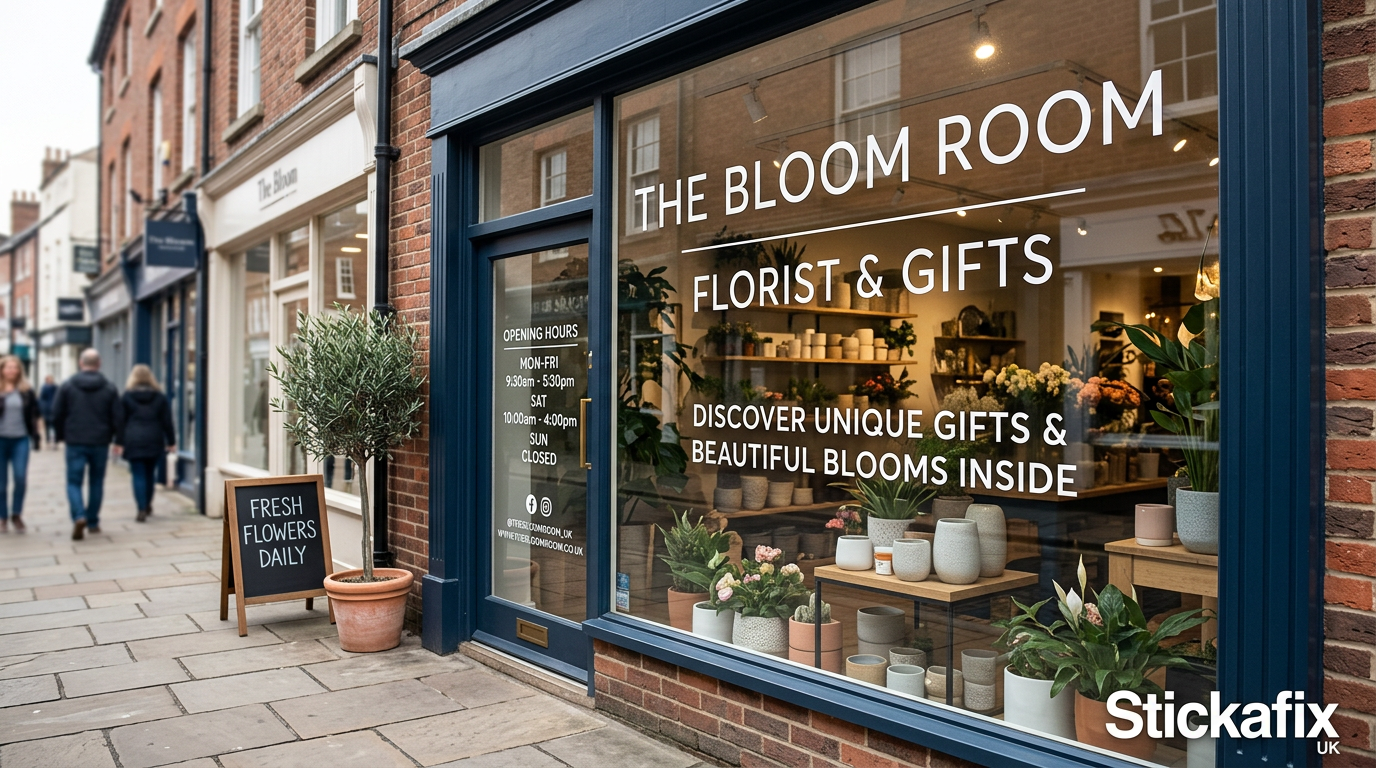
Your name is the headline. It should be the largest and most visible element, ideally positioned where it can be read from across the street or from a passing car. If you have a logo with simple shapes, it may translate well into cut vinyl. Very fine detail, gradients and photographic elements don't suit single-colour cutting, so a simplified version of your logo often works better.
Opening hours
Opening hours are one of the most useful things you can put on a shop door. Customers arriving outside your hours can see immediately when to come back, and it reduces calls and messages asking the same question. Ready-made business hours stickers are a quick way to get a tidy, consistent layout without designing one yourself.
Place hours on or beside the entrance door, at roughly eye level. People read this information up close, so it doesn't need to be large, but it does need to be clear.
Contact details
A phone number, website or email address helps people get in touch after hours or save your details for later. Tradespeople with a counter or workshop often find this especially valuable. Choose one or two methods of contact rather than listing everything, and make sure the phone number is large enough to read from the pavement.
Social media handles
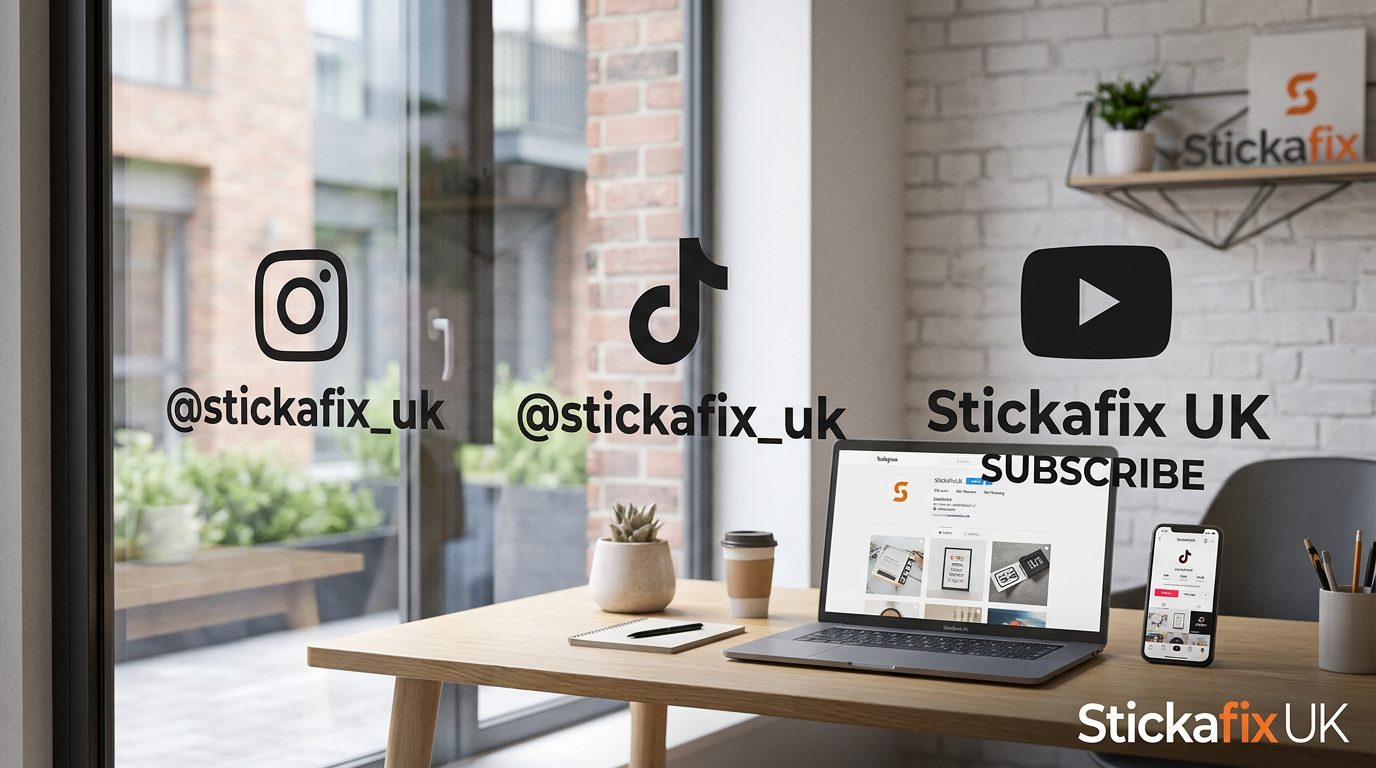
A short Instagram, Facebook or TikTok handle on your window encourages passers-by to follow you, see your latest work or check menus and offers. Salons, barbers, bakeries and boutiques often see good engagement from this. The social media sticker designer lets you add your handle alongside a platform icon, so customers know exactly where to find you.
Stick to the one or two platforms you actually keep up to date. An abandoned account linked from your window can do more harm than good.
Promotional messages
Seasonal sales, new services, "Now Hiring" notices and grand opening messages all work well as window lettering. Because promotions change, it's sensible to keep them separate from your permanent branding. That way you can remove a sale message without disturbing your name, hours or contact details.
Choosing Colours for Shop Window Lettering
Colour choice has a bigger effect on readability than most people expect. Glass behaves differently from a painted wall or vehicle panel, so it's worth thinking about how your window looks at different times of day.
Think about what's behind the glass
During daylight, most shop interiors look darker than the outside world when viewed from the street. That's why white, cream, silver and other light colours are so popular for commercial window graphics: they stand out clearly against the darker interior. Dark colours such as black or navy can disappear against a dim interior unless there's a light-coloured backdrop, blind or display behind them.
At night the situation can reverse. A brightly lit interior may make light-coloured lettering look less prominent, while darker lettering becomes more visible. If your business is mainly open during the day, prioritise daytime visibility.
Match your brand, but put readability first
If your brand colours are strong and contrast well with your window, use them. If they don't, consider using your brand colour for a logo or accent and a high-contrast colour such as white for the essential text. The guide to choosing decal colours goes into more detail on contrast and how different colours perform.
Keep the palette simple
One or two colours usually looks more professional than several. A single consistent colour for your name, hours and contact details gives the window a cohesive, designed feel.
Placement Tips for a Professional-Looking Shopfront
Good placement is what separates a polished shopfront from one that looks improvised. A few simple principles make a big difference.
- Create a clear hierarchy: business name largest, services or tagline second, then hours and contact details smaller.
- Use eye level for detail: opening hours and social handles are read up close, so place them around eye height on or near the door.
- Keep the name high and central: a name placed across the upper part of the main window is visible over parked cars and passing pedestrians.
- Leave breathing space: empty glass around your lettering helps it stand out. Covering every pane makes a window look busy and harder to read.
- Align with the frame: centring text within a pane or aligning it to a mullion or door edge gives a neat, intentional look.
- Consider viewing distance: text meant to be read from across the road needs to be considerably larger than text read from the doorstep.
Before ordering, measure each pane and mark out your planned layout with masking tape. Stepping back across the street to check the proportions is one of the most useful things you can do. It quickly shows whether your lettering is too small, too large or awkwardly positioned.
Inside or outside the glass?
Standard cut vinyl lettering is normally applied to the outside face of the glass so it reads the right way round. Lettering applied to the inside and read through the glass needs to be mirrored, and not every product is designed for that. If you specifically need inside-facing lettering, confirm suitability before ordering.
Check any restrictions first
Some leases restrict changes to shopfronts, and listed buildings or properties in conservation areas may have additional controls on signage. Rules on advertisements can also vary. If you're unsure, check with your landlord or your local planning authority before installing larger graphics. Large glazed doors and panels may also need visibility markings for safety, so it's worth checking current building regulations guidance if you're planning a new shopfront.
Applying Business Window Decals Neatly
Window glass is one of the easiest surfaces to apply vinyl to, but preparation still matters. A careful application gives straight lines and no bubbles, which is exactly what makes lettering look professionally fitted.
- Clean the glass thoroughly: remove dirt, grease and any residue from glass cleaners that contain wax or silicone, then let the surface dry completely.
- Check the conditions: avoid applying in very cold weather, direct hot sun or damp conditions, as these can affect how well the adhesive bonds.
- Position with tape first: use masking tape to hold the decal in place and check it's level before removing any backing paper.
- Use a hinge method for larger lettering: tape across the centre, peel back one half, apply it, then repeat with the other half. This keeps long lines of text straight.
- Squeegee firmly: work from the centre outwards to push out air, then slowly peel away the application tape at a low angle.
For a full walkthrough, including wet and dry methods, see the guide on how to apply vinyl decals.
Keeping Your Window Lettering Looking Its Best
Once your lettering is in place, a little care helps it stay sharp. Give the adhesive time to settle before cleaning the window, then use a soft cloth and mild, non-abrasive cleaner. Avoid scraping over the letters with blades or squeegees, and don't aim a pressure washer directly at the edges of the vinyl.
Faded, peeling or out-of-date lettering sends the wrong message, so review your window from time to time. If your phone number, hours or social handle changes, replace that element promptly. Small updates like this keep your shopfront looking cared for and trustworthy.
Frequently Asked Questions
Do vinyl window stickers have a background?
Single-colour cut vinyl lettering doesn't have a background. Only the letters and shapes are applied, so the glass itself shows through around the design.
Can I remove business window lettering later?
Yes, vinyl lettering can be removed from glass, usually by gently warming it and peeling it away, then cleaning off any remaining adhesive. This makes it practical to update hours or promotions over time.
What colour is best for shop window lettering?
White and other light colours are a popular choice because they stand out against the darker look of most shop interiors during the day. The best choice depends on your window, interior and brand colours.
Can I design my own business window decals?
Yes. Online designers let you choose your text, font, colour and size, so you can create custom lettering that matches your branding without specialist software.
Creating a Shopfront That Works for You
Effective shop window lettering doesn't need to be complicated. Put your business name front and centre, add clear opening hours and contact details, include one or two social handles and keep promotions separate so they're easy to change. Choose colours with strong contrast, leave plenty of clear glass and take your time with the application.
When you're ready to put your ideas onto glass, you can design custom vinyl lettering online with your own wording, font and colour, then preview it before you order.