

If you've ever shopped for stickers online, you've probably seen the terms vinyl decals and printed stickers used as though they mean the same thing. They don't. The way each one is made affects how it looks, how it's applied and how it holds up outdoors. If you're comparing vinyl decals UK suppliers offer with printed alternatives, knowing the difference will help you choose the right product the first time.
This guide explains how vinyl cut stickers and printed stickers are made, where each works best and what to consider before you order. If you already know you want clean, single colour lettering or graphics, you can browse the full range of vinyl-cut stickers and decals as you read.
What Is a Vinyl-Cut Decal?
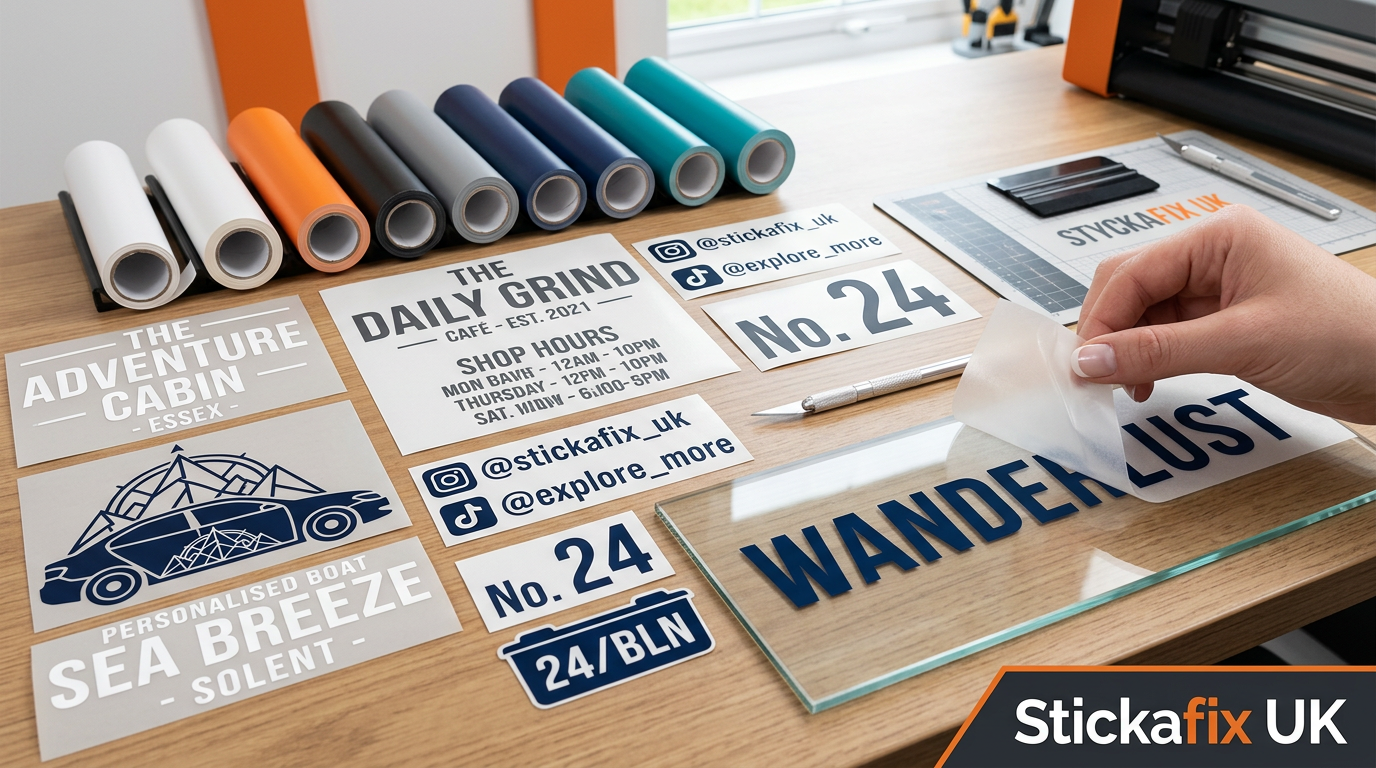
A vinyl-cut decal is made from a sheet of solid coloured vinyl. A computer-controlled plotter uses a fine blade to cut the outline of your letters or design into the vinyl without cutting through the backing paper underneath.
Once cut, the excess vinyl is peeled away by hand. This process is called weeding. What's left is only the design itself: the letters, shapes or artwork, with nothing in between. A layer of application tape (also called transfer tape) is then placed over the top so the separate pieces stay correctly spaced while you apply them.
No background, just your design
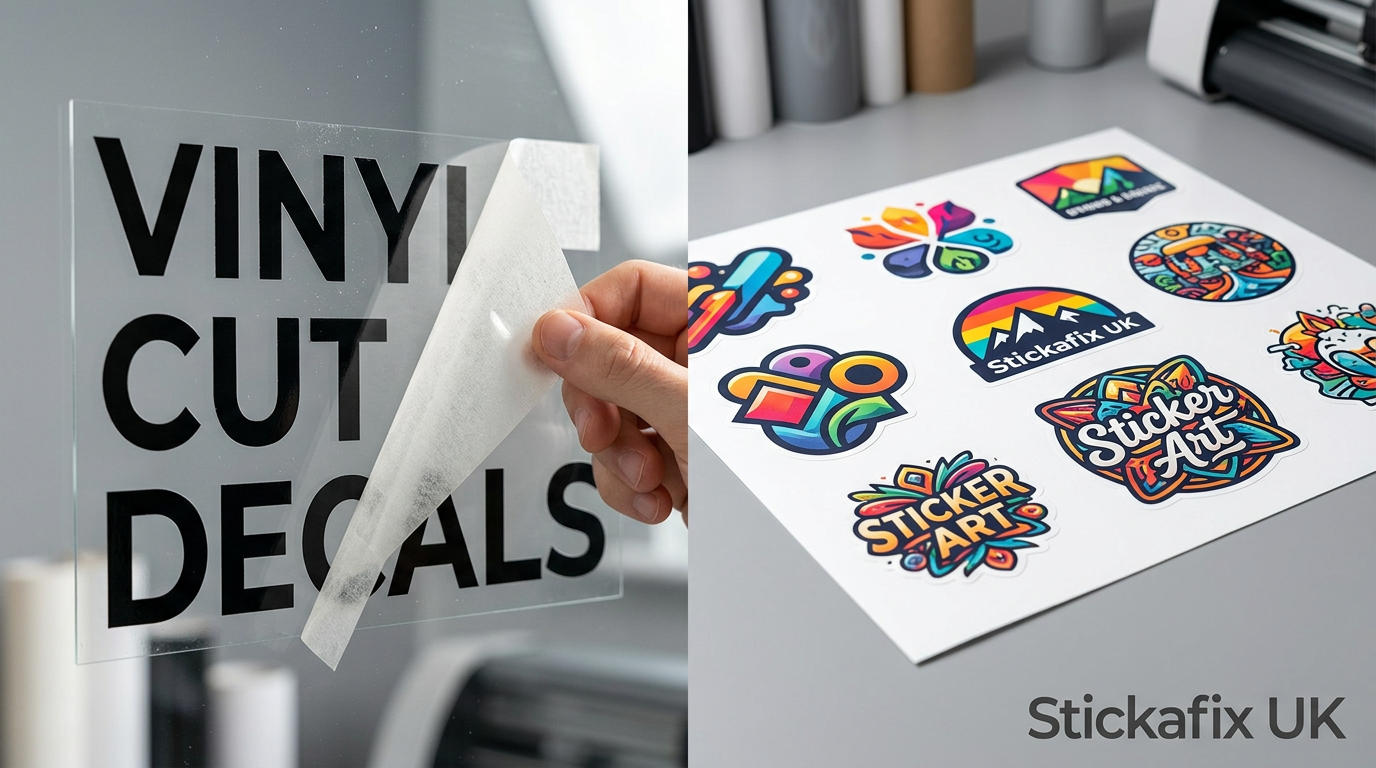
The most important thing to understand about vinyl-cut decals is that they have no background. If you order white lettering for a car's rear window, you get white letters and nothing else. The glass shows through between and around each letter, so the finished result looks painted on rather than stuck on.
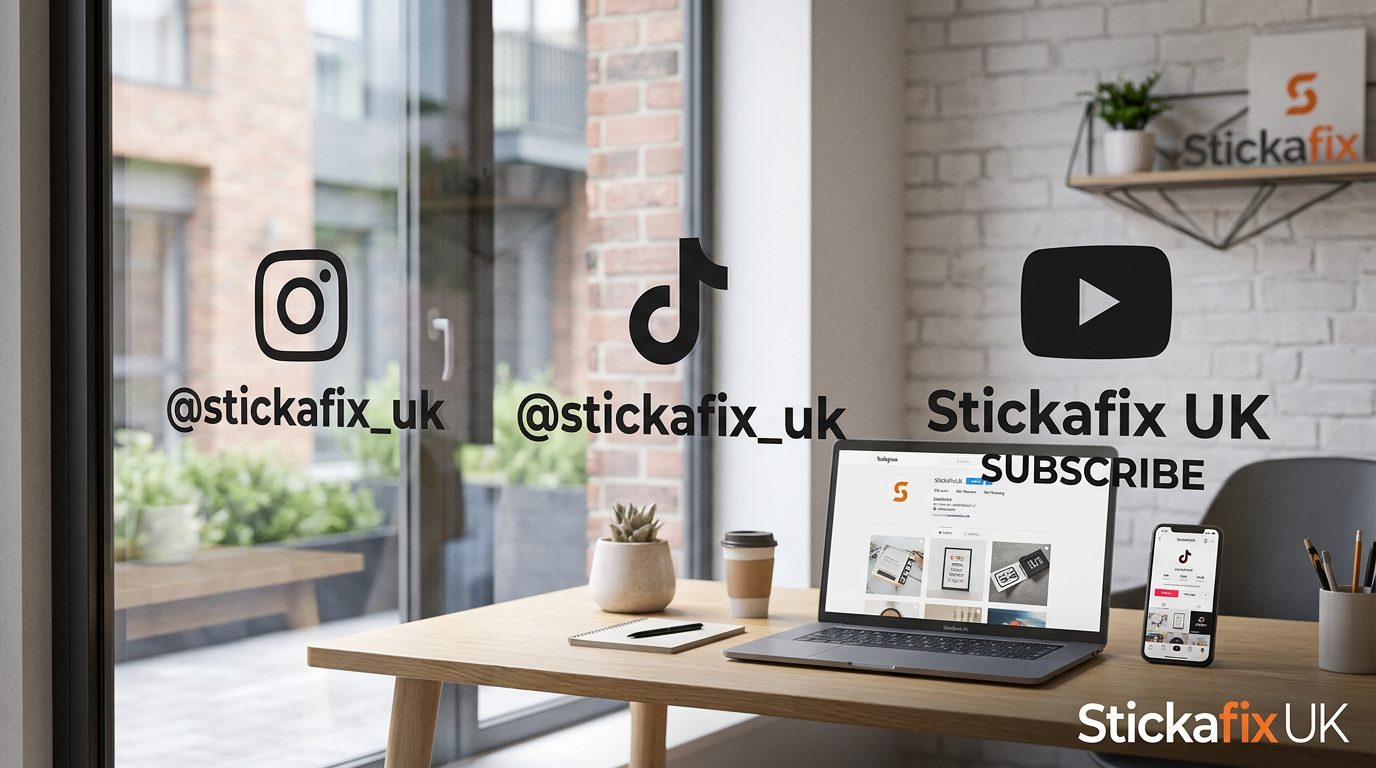
This is why vinyl cut stickers are so popular for custom vinyl lettering such as boat names, van signage, shop opening hours and social media handles. There's no white box or clear film edge around the text to catch dirt or give it away as a sticker.
Colour runs through the material
Because the vinyl itself is the colour, there's no separate ink layer sitting on the surface. The colour is part of the film. This is one reason vinyl-cut decals are widely used for outdoor signage and vehicle graphics.
What Is a Printed Sticker?
A printed sticker is created by printing ink onto a base material. That base is commonly white vinyl, clear vinyl or paper, depending on the intended use. After printing, the sticker is cut to shape, either as a simple square, circle or rectangle, or around the outline of the design (often called contour cutting or kiss cutting).
Printing makes it possible to reproduce almost anything: photographs, gradients, shadows, detailed illustrations and full-colour logos. Many printed stickers designed for outdoor use are also finished with a protective laminate over the ink.
There's usually a visible base
Because the ink needs something to sit on, a printed sticker normally has a visible base material. On a white base, you'll see white around or behind the artwork unless the design fills the entire shape. On a clear base, you may see a faint film edge, especially on coloured or textured surfaces.
For things like laptop stickers, product labels and giveaway stickers at events, this isn't a problem. For lettering on a car door or the transom of a boat, it can look less professional than a vinyl-cut finish.
Vinyl Decals vs Printed Stickers: The Key Differences
Here's how the two compare across the points that matter most to buyers.
Appearance
- Vinyl-cut decals: Clean, crisp edges with no background. Ideal for text, logos and bold shapes. Best suited to single colour designs.
- Printed stickers: Can show unlimited colours, photos and gradients. Usually have a white or clear base visible around the design.
Colour options
- Vinyl-cut decals: Typically one solid colour per decal. Multi-colour designs are possible by layering different vinyls, but they need more work and careful alignment.
- Printed stickers: Full colour in a single sticker, making them better for complex artwork.
Outdoor durability
- Vinyl-cut decals: The colour is part of the vinyl, so there's no ink layer to wear away. Quality outdoor vinyl is made to handle sun, rain and washing.
- Printed stickers: Durability depends on the base material, inks and whether a laminate is used. Unlaminated printed stickers are generally more vulnerable to fading and scuffing outdoors.
No sticker lasts forever, and real-world lifespan depends on the material, the surface, how much direct sun it gets and how it's cleaned. Our guide on how long vinyl decals last goes into the factors that make the biggest difference.
Application
- Vinyl-cut decals: Applied using application tape. You position the decal, remove the backing paper, press the vinyl down and then peel the tape away. It takes a little more care but gives a professional result.
- Printed stickers: Usually a single piece, so you simply peel and stick.
Fine detail and small text
- Vinyl-cut decals: Very thin lines, tiny text and intricate script fonts can be difficult to weed and may be more prone to lifting. Bolder fonts and sensible sizes work best.
- Printed stickers: Small text and fine detail print well because nothing needs to be weeded.
Understanding Vinyl Materials: ORACAL 651 and 751C
Not all vinyl is the same, and it's worth knowing that vinyl-cut decals can be made from different grades of film. Two well-known materials are ORACAL 651 and ORACAL 751C, both made by ORAFOL.
ORACAL 651 is a calendered vinyl. It's a widely used general-purpose material for signage, lettering and decals on flat or gently curved surfaces such as windows, panels and bins.
ORACAL 751C is a cast vinyl and sits in a higher performance category. Cast vinyl is manufactured differently from calendered vinyl, which generally makes it thinner, more dimensionally stable and better at conforming to curves. It's often chosen for more demanding applications such as vehicle bodywork and marine use.
The two shouldn't be treated as interchangeable. The right choice depends on where the decal is going, the shape of the surface and how much exposure it will face. If you're unsure which material a particular product uses, check the product page or get in touch before ordering.
Which Should You Choose?
The best option depends on what you're sticking, where it's going and what you want it to look like.
Choose a vinyl-cut decal if you want:
- Lettering or a simple logo on a car, van, 4x4 or motorbike.
- A boat name or lettering on a hull or transom.
- Shop window lettering, opening hours or trade details.
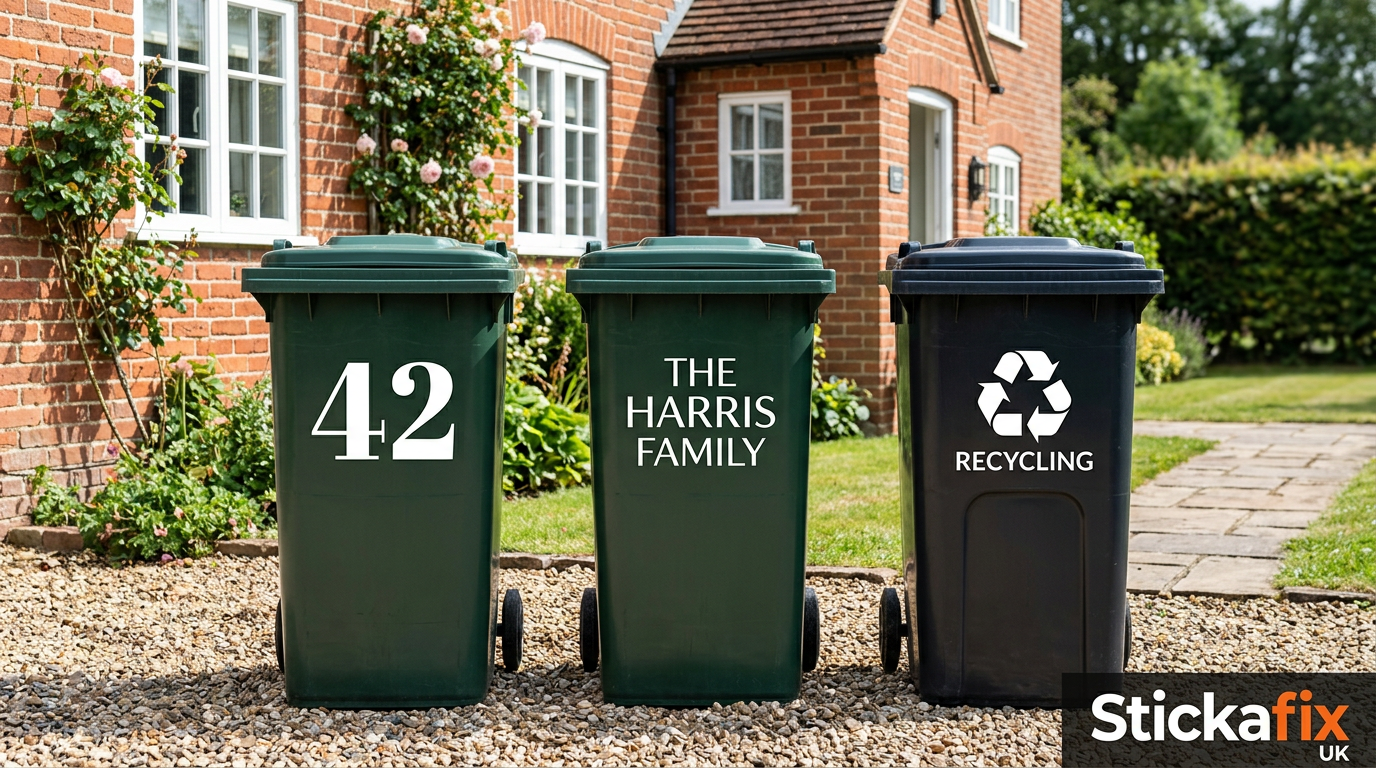
- House numbers or street names on wheelie bins.
- A social media handle on a rear window or shop door.
- A clean, painted-on look with no visible background.
Choose a printed sticker if you want:
- A full-colour logo, photograph or illustration.
- Designs with gradients, shading or lots of colours.
- Very small text or intricate detail.
- Stickers for packaging, merchandise or handing out at events.
For most outdoor lettering jobs, single colour vinyl stickers are the practical choice. Picking the right colour is just as important as picking the right material, because a decal needs strong contrast against its surface to stand out. Our guide to choosing decal colours covers which combinations work well on glass, paintwork and hulls.
Getting the Best Results From Vinyl-Cut Decals
Vinyl-cut decals reward a bit of preparation. A few simple steps make a big difference to how well the decal sticks and how long it looks good.
- Clean the surface thoroughly. Remove wax, polish, grease and dust. Isopropyl alcohol is commonly used for final cleaning on suitable surfaces.
- Pick the right conditions. Avoid applying in cold, damp weather or in strong direct sunlight on a hot panel. A mild, dry day or a garage works best.
- Measure and mark the position. Use masking tape to hold the decal in place and check it's level before you remove the backing.
- Press firmly. Use a squeegee or plastic card, working from the centre outwards to push out air.
- Peel the application tape slowly. Pull it back at a low angle, close to the surface. If a letter starts to lift with the tape, press it down again before continuing.
For a full walkthrough, including wet and dry methods, see our step-by-step guide on how to apply vinyl decals.
Frequently Asked Questions
Do vinyl decals have a white background?
No. A vinyl-cut decal is only the cut design itself. The surface you apply it to becomes the background, which is why vinyl lettering looks so clean on glass and paintwork.
Can a vinyl-cut decal have more than one colour?
It's possible by layering separate pieces of coloured vinyl, but most vinyl-cut decals are single colour. If your design relies on many colours or gradients, a printed sticker is usually more suitable.
Are vinyl decals better than printed stickers for cars?
For lettering, names and simple graphics, vinyl-cut decals are a popular choice for vehicles because there's no background and no ink layer on the surface. For full-colour artwork, a quality laminated printed sticker may be the better option.
Can vinyl decals be removed?
Yes, though permanent adhesive vinyl is designed to stay put, so removal takes some care. Gentle heat and patience usually help, and any adhesive residue can be cleaned off afterwards with a suitable remover.
Find the Right Decal for Your Project
Printed stickers are brilliant for colourful artwork, but when you want crisp lettering, a professional finish and no visible background, vinyl-cut decals are hard to beat. Think about your design, your surface and how much outdoor exposure it will face, and the right choice usually becomes clear.
If you're ready to create your own lettering, try our online sticker designer to choose your text, font, colour and size, and see your custom vinyl decal take shape before you order.